Capt. Kevin Chabot on Building a Modern Pipeline for First Responders
When Capt. Kevin Chabot started in law enforcement nearly 24 years ago, most police departments in York County—except for a couple of the largest—were tucked into the basements of town halls. Policing, dispatch, and training looked very different then.
“Public safety has evolved into a true profession,” says Chabot, now a captain with the Wells Police Department and chair of the District 1 Training Council. “Anytime you’re able to look professional, have a nice facility to train in, train with peers from other communities, and standardize practices—it says a lot for individual agencies and helps attract more people to the work.”
That vision is taking shape in Alfred, where York County’s First Responder Training Center will offer a central, state-of-the-art center for firefighters, EMS, dispatchers, and law enforcement to learn together. For Chabot, who has taught at the Maine Criminal Justice Academy (MCJA) and York County Community College, the facility represents a practical solution to a longstanding problem.
Capt. Kevin Chabot
“Right now, a lot of training is a hodgepodge,” he explains. “If Wells wants to sponsor a new detective seminar or an interviews and interrogations class, we put it together and invite others if there’s space. Old Orchard Beach might sponsor something else, and another department a different course. It works, but it’s not standardized—and travel to the MCJA two hours away makes coordination even harder.”
As chair of the Training Council, Chabot convenes York County’s police agencies to coordinate needs across 29 towns. It is a big lift, especially for departments that can spare only a few people at a time.
“Wells has 26 officers,” he says. “We may only have two we can send to an interview and interrogation class. Bringing courses into a central location—and putting them on a predictable calendar—means more people can actually get the training. We want to know every March this class runs, every September that class runs. Standardized.”
Chabot notes that other training districts in Maine exist, but York County is uniquely positioned to modernize how training is delivered. The new facility will make it easier to host mandated courses and specialized instruction without one agency shouldering the full burden of logistics.
“We can collaborate in a regional way,” he says. “There will be more opportunities, more consistency, and better coordination.”
Crucially, this vision includes dispatch. “Dispatch gets left out of a lot of training because people don’t always think of them on the front line,” he says. “But when you call 911, you want someone who can give CPR instructions, help in a sinking vehicle, or manage an active shooter call. They’re starting the process in high-stress situations—and they need the same access to high-standard training.”
That access matters for staffing and wellness, too. “In Wells, we’ve been lucky, but Sanford and Biddeford are always looking for dispatchers,” he adds. “They deal with the same stress—just not seeing it in person.”
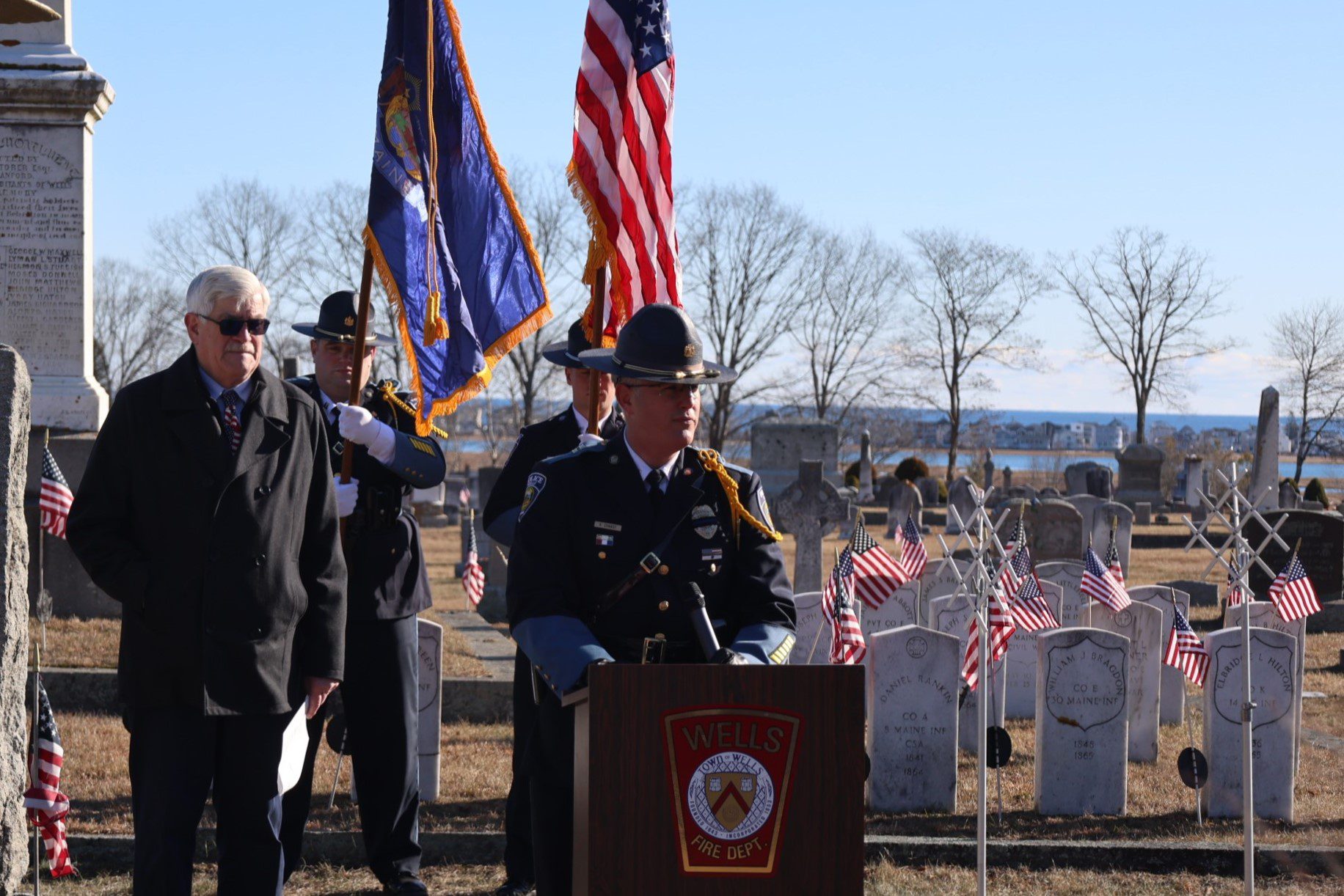
He also sees the Training Center as a way to strengthen existing pipelines, including the region’s reserve officer programs. “We’re sponsoring a reserve officer class right now,” he notes. “It’s super important to hire reserve officers. Not every county has those opportunities. A central facility helps scale what works.”
According to Chabot, the professional look and feel of a shared campus sends a message to current and future first responders. “It tells people we take this work seriously,” he said. “You’re training with peers from neighboring communities and learning best practices—that’s how you build competence, confidence, and consistency.”
Opening in late 2025, the Training Center represents one more step in the continued professionalization of public safety in York County. A recent prior example includes the Wells Police Department station, which was built by Landry/French, the contractor leading the Training Center project.
“The Training Center is one step in that evolution where you really see public safety become more professional,” he adds. “This will be a place you can rely on for high-standard training.”
Chabot also credits York County’s leaders for thinking holistically about public safety—pairing the Training Center with the Recovery Center.
“We’re at the edge of the state line, and you don’t always think of public safety as first on the list for investment,” he explains. “It’s forward-thinking that county leaders identified problems and acted. From the police side, we try to attack the supply. Addressing the demand side—supporting folks with addiction—that’s even better. There’s always going to be a need for recovery.”
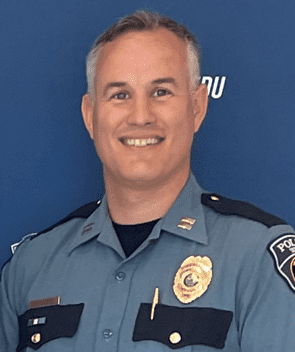
Chabot’s perspective is grounded in both scholarship and service. He began as a summer officer in 2001 and transitioned to full-time in 2004. He holds a BA in Political Science with a minor in Economics, an MS in Community Economic Development, a graduate certificate in Criminal Justice, and a Doctorate in Educational Leadership from the University of New England, where his dissertation examined how procedural justice affects public satisfaction and legitimacy in southern Maine police agencies. A graduate of the FBI National Academy’s 272nd session, he’s been published in the FBI National Academy Associates magazine.
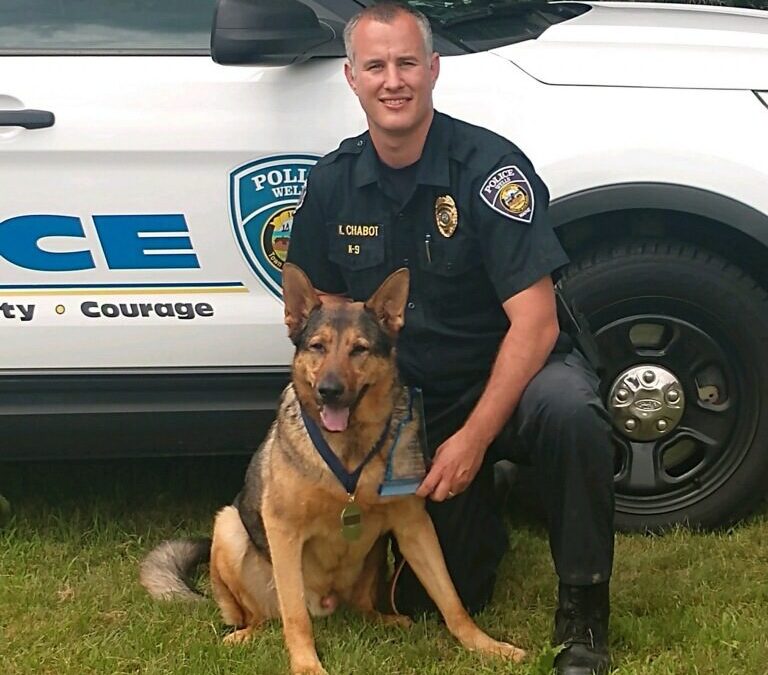
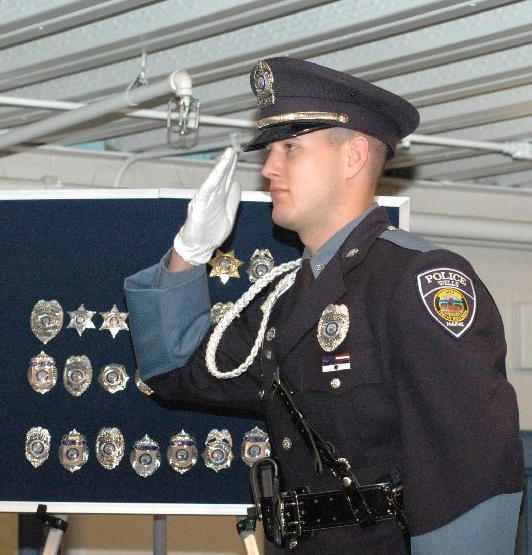
On the line, Chabot handled two police dogs—K-9 Elli and K-9 Jagger—and served a decade as the ranking member of the Honor Guard. He instructs field sobriety testing at the MCJA and rates physical fitness tests there. Appointed by the Governor, he represents the Maine Chiefs of Police on the 911 Advisory Board. He also served eight years in the Army Reserve, leaving as a staff sergeant, with deployments to Bosnia and Iraq.
Asked what success will look like once the Training Center opens, Chabot cites predictability and partnership.
“A standardized schedule, more chances to train, and a professional environment where police, fire, EMS, and dispatch learn side-by-side,” he says. “That’s how you raise the bar—together.”
About First County Foundation
Founded in 2023, FCF is charged with a mission “to support and strengthen safe and healthy communities by resourcing transformational solutions to the emergent needs of York County.”
Contact Us
If you have any questions about FCF, please get in touch with Rachel Stansfield at 207.459.7055 or restansfield@yorkcountymaine.gov.