Building Resilience Through Service

Building Resilience Through Service

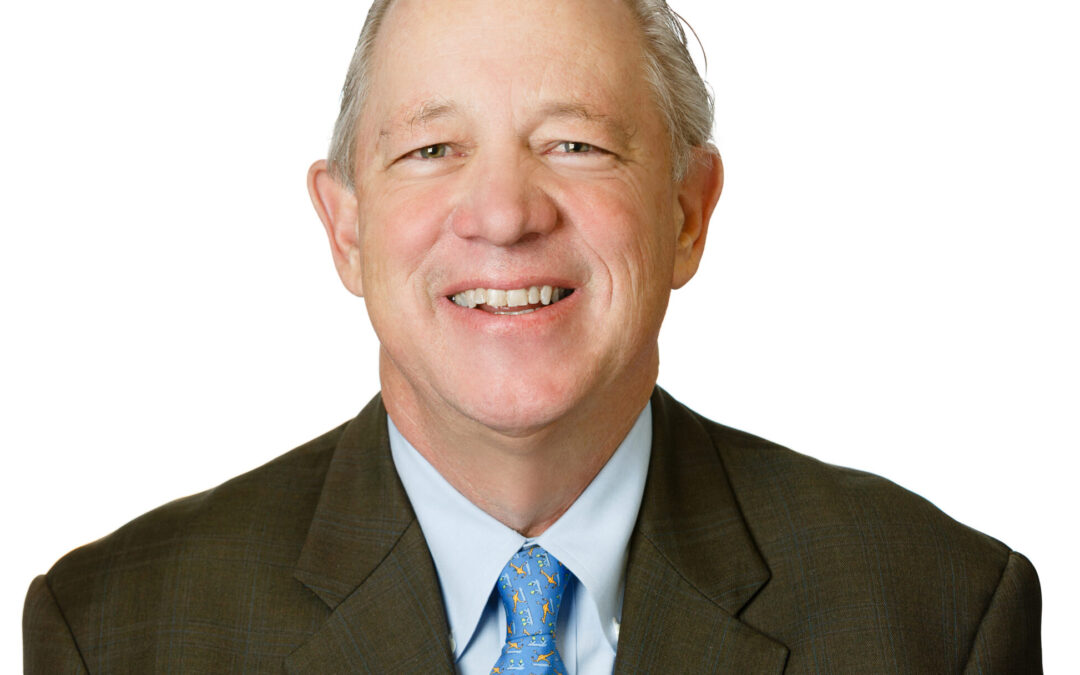
E. Russell Grady, Jr. has spent more than 25 years responding to crises in York County. As a firefighter for the Town of Kennebunkport and former Corrections Counselor with the Massachusetts Department of Corrections, he has seen firsthand how substance use, addiction, and public safety intersect in communities across Maine.

Today, Grady serves on the First County Foundation (FCF) Board of Directors while maintaining his dual roles as Co-owner and Associate Broker at Lighthouse Real Estate Group in Kennebunk and Lead Solutions Engineer at CCC Intelligent Solutions in Chicago. His career bridges hands-on community service with innovative problem-solving—a combination that shapes his approach to FCF’s mission.

The connection runs deeper than professional experience.

“You see the impact on families and neighborhoods,” Grady says of his firefighting work. “Supporting people through recovery and helping first responders do their jobs safely—those things are inseparable.”

Like many Americans, Grady has lost someone he knew to overdose. He was introduced to FCF by Board Chair Billy Shore and resonated immediately with the organization’s approach to creating strong, healthy communities by supporting both recovery and first responders.

His corrections background gave him early insight into the complex relationship between substance use and the justice system. Five years as a Corrections Counselor showed him how addiction affects not just individuals, but entire families and communities.

His perspective informs his work with FCF today.

“Every sector has its own way of building resilience,” he notes. “Whether it’s a family finding housing, a firefighter responding to a call, or a nonprofit stretching every dollar—each one matters.”

Grady’s professional background spans auto insurance technology, real estate, and mission-driven community work. At CCC Intelligent Solutions, he brings a systems-level approach to challenges. In real estate, he helps families and businesses put down roots in southern Maine.

Grady’s diverse experience shapes how he thinks about FCF, as its dual focus on recovery services and first-responder training reflects what he sees as an essential partnership.

“We have people in crisis who need help, and we have first responders who need the tools and training to help them safely,” he explains. “FCF connects those dots.”

Grady also serves on the board of the Kennebunkport Conservation Trust, where he has learned the importance of long-term stewardship—an ethic he brings to FCF. He sees clear parallels between conservation and community health, as both require sustainable, mission-driven approaches to deliver lasting impact.

“We have a duty to make sure these resources are here for the next generation,” he says of FCF’s First Responder Training Center and Substance Use Treatment Center. “That means smart stewardship and making sure the burden doesn’t fall on taxpayers.”

On the FCF Board, Grady’s priorities include expanding awareness of the organization’s work, strengthening its financial foundation, and ensuring the long-term viability of both facilities. His approach reflects his firefighting background: prepare thoroughly, respond effectively, and always think about the next call.

FCF Chief Advancement Officer Rachel Stansfield notes that Grady’s deep understanding of both public safety and community health makes him an invaluable partner in advancing the organization’s mission. “His leadership helps ensure our initiatives have lasting impact across York County,” she says.

About First County Foundation
Founded in 2023, FCF is charged with a mission “to support and strengthen safe and healthy communities by resourcing transformational solutions to the emergent needs of York County.”

Contact Us
If you have any questions about FCF, please get in touch with Rachel Stansfield at 207.459.7055 or restansfield@yorkcountyfcf.org.

Q&A with Kathy Dumont

Q&A with Kathy Dumont

Kathy Dumont and Family

Q&A with Kathy Dumont

What is your name and what do you do?
Kathy Dumont, (retired) former executive administrative assistant to the York County Manager

How did you learn about FCF? Why did you decide to join the board?
I was employed by York County Government for over 16 years and as the Executive Assistant to the York County Manager, I was involved from the beginning with the creation of the First Responder and Substance Use projects. I attended and took minutes for the committee meetings that consisted of area York County police and fire chiefs, York County D.A., YCCC administrative personnel, Commissioners, and many other stakeholders.

I decided to join the Board as I am so proud of the vision that the York County Government Manager and Board of Commissioners had for utilizing the American Rescue Plan money and how many people will be helped.

Why is FCF’s mission important to you? Feel free to share a personal anecdote if relevant.
While I strongly believe both buildings will be hugely beneficial to York County, I believe the York County Substance Use Treatment and Recovery Center is strongly needed. I was also involved in the development of the Layman Way Recovery Center, the only drug/alcohol diversion program in Maine, which helped so many. The new center will be helping those struggling with addiction in a much larger manner.

What experience do you bring to the board?
My long work history with County government enables me to understand the growing needs of York County. Having a centralized training center for our first responders will be a huge benefit to York County.

What impact do you foresee FCF having on the greater York County community?
I believe FCF will have a great impact on Y.C. for many years to come. We now run the Food Pantry and have already seen, through Rachel’s hard work, an uptick in donations that are so greatly needed in our community.

The Recovery Center will offer aftercare and housing for those entering back into the community, as well as job assistance. I believe FCF will be instrumental in obtaining funding that will be needed to keep these important programs functioning.

What are your goals as a board member?
My main goal as a board member is to continue to “spread the word” about First County Foundation and the important work we do to keep the York County Training Center and Recovery Center running.

Anything else you would like to share?
I believe we have a strong Board and, along with the support of the Y.C. Commissioners and County Manager, will continue to be effective in educating the community on the importance of assisting with funding of these two very important projects for years to come.

About First County Foundation
Founded in 2023, FCF is charged with a mission “to support and strengthen safe and healthy communities by resourcing transformational solutions to the emergent needs of York County.”

Contact Us
If you have any questions about FCF, please get in touch with Rachel Stansfield at 207.459.7055 or restansfield@yorkcountymaine.gov.

A County That Trains Together

A County That Trains Together

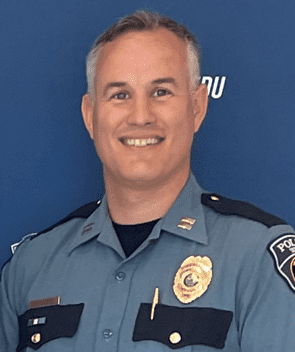
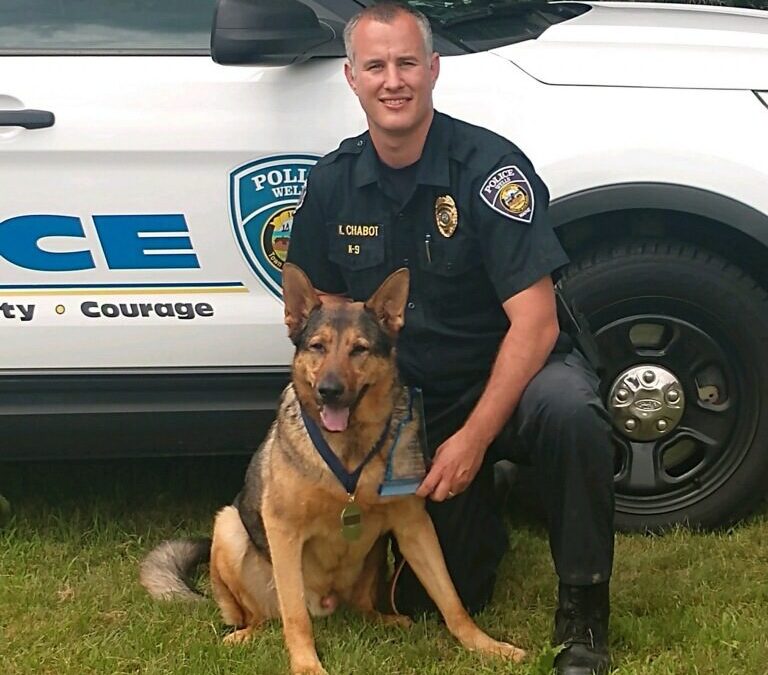
Capt. Kevin Chabot on Building a Modern Pipeline for First Responders

When Capt. Kevin Chabot started in law enforcement nearly 24 years ago, most police departments in York County—except for a couple of the largest—were tucked into the basements of town halls. Policing, dispatch, and training looked very different then.

“Public safety has evolved into a true profession,” says Chabot, now a captain with the Wells Police Department and chair of the District 1 Training Council. “Anytime you’re able to look professional, have a nice facility to train in, train with peers from other communities, and standardize practices—it says a lot for individual agencies and helps attract more people to the work.”

That vision is taking shape in Alfred, where York County’s First Responder Training Center will offer a central, state-of-the-art center for firefighters, EMS, dispatchers, and law enforcement to learn together. For Chabot, who has taught at the Maine Criminal Justice Academy (MCJA) and York County Community College, the facility represents a practical solution to a longstanding problem.

Capt. Kevin Chabot

“Right now, a lot of training is a hodgepodge,” he explains. “If Wells wants to sponsor a new detective seminar or an interviews and interrogations class, we put it together and invite others if there’s space. Old Orchard Beach might sponsor something else, and another department a different course. It works, but it’s not standardized—and travel to the MCJA two hours away makes coordination even harder.”

As chair of the Training Council, Chabot convenes York County’s police agencies to coordinate needs across 29 towns. It is a big lift, especially for departments that can spare only a few people at a time.

“Wells has 26 officers,” he says. “We may only have two we can send to an interview and interrogation class. Bringing courses into a central location—and putting them on a predictable calendar—means more people can actually get the training. We want to know every March this class runs, every September that class runs. Standardized.”

Chabot notes that other training districts in Maine exist, but York County is uniquely positioned to modernize how training is delivered. The new facility will make it easier to host mandated courses and specialized instruction without one agency shouldering the full burden of logistics.

“We can collaborate in a regional way,” he says. “There will be more opportunities, more consistency, and better coordination.”

Crucially, this vision includes dispatch. “Dispatch gets left out of a lot of training because people don’t always think of them on the front line,” he says. “But when you call 911, you want someone who can give CPR instructions, help in a sinking vehicle, or manage an active shooter call. They’re starting the process in high-stress situations—and they need the same access to high-standard training.”

That access matters for staffing and wellness, too. “In Wells, we’ve been lucky, but Sanford and Biddeford are always looking for dispatchers,” he adds. “They deal with the same stress—just not seeing it in person.”

He also sees the Training Center as a way to strengthen existing pipelines, including the region’s reserve officer programs. “We’re sponsoring a reserve officer class right now,” he notes. “It’s super important to hire reserve officers. Not every county has those opportunities. A central facility helps scale what works.”

According to Chabot, the professional look and feel of a shared campus sends a message to current and future first responders. “It tells people we take this work seriously,” he said. “You’re training with peers from neighboring communities and learning best practices—that’s how you build competence, confidence, and consistency.”

Opening in late 2025, the Training Center represents one more step in the continued professionalization of public safety in York County. A recent prior example includes the Wells Police Department station, which was built by Landry/French, the contractor leading the Training Center project.

“The Training Center is one step in that evolution where you really see public safety become more professional,” he adds. “This will be a place you can rely on for high-standard training.”

Chabot also credits York County’s leaders for thinking holistically about public safety—pairing the Training Center with the Recovery Center.

“We’re at the edge of the state line, and you don’t always think of public safety as first on the list for investment,” he explains. “It’s forward-thinking that county leaders identified problems and acted. From the police side, we try to attack the supply. Addressing the demand side—supporting folks with addiction—that’s even better. There’s always going to be a need for recovery.”

Capt. Kevin Chabot

Chabot’s perspective is grounded in both scholarship and service. He began as a summer officer in 2001 and transitioned to full-time in 2004. He holds a BA in Political Science with a minor in Economics, an MS in Community Economic Development, a graduate certificate in Criminal Justice, and a Doctorate in Educational Leadership from the University of New England, where his dissertation examined how procedural justice affects public satisfaction and legitimacy in southern Maine police agencies. A graduate of the FBI National Academy’s 272nd session, he’s been published in the FBI National Academy Associates magazine.

On the line, Chabot handled two police dogs—K-9 Elli and K-9 Jagger—and served a decade as the ranking member of the Honor Guard. He instructs field sobriety testing at the MCJA and rates physical fitness tests there. Appointed by the Governor, he represents the Maine Chiefs of Police on the 911 Advisory Board. He also served eight years in the Army Reserve, leaving as a staff sergeant, with deployments to Bosnia and Iraq.

Asked what success will look like once the Training Center opens, Chabot cites predictability and partnership.

“A standardized schedule, more chances to train, and a professional environment where police, fire, EMS, and dispatch learn side-by-side,” he says. “That’s how you raise the bar—together.”

About First County Foundation
Founded in 2023, FCF is charged with a mission “to support and strengthen safe and healthy communities by resourcing transformational solutions to the emergent needs of York County.”

Contact Us
If you have any questions about FCF, please get in touch with Rachel Stansfield at 207.459.7055 or restansfield@yorkcountymaine.gov.

Building a Connected Path to Recovery

Building a Connected Path to Recovery

Jen Ouellette has spent more than 30 years in addiction treatment and housing in York County. She helped develop the Layman Way Recovery Center while at York County Shelter Programs and led services across development, operations, and direct care.

Today, Ouellette serves as Deputy Director of the Sanford Housing Authority and as a member of the York County Behavioral Health Committee. Her work focuses on aligning housing with a full continuum of care, enabling people to transition from crisis to stability without losing momentum.

Nonprofit experience shaped her perspective.

“You just make do as a nonprofit,” she says. “Grant dollars are restrictive.”

Facilities were often whatever space was available, even when programs delivered exceptional care. She also faced persistent access barriers. Detox beds were frequently located outside the county. Behavioral health services could be two towns away. Transportation was unreliable for people without a vehicle or depending on Medicaid rides.

A central challenge stood out. “In York County, there are no beds for an intoxicated person,” Ouellette says.

Returning someone to an abstinence-based setting after use was unsafe for them and others, yet the nearest alternative could be a long drive with uncertain availability.

These gaps informed a countywide model. The new approach unites assessment, detox, medical and behavioral health care, case management, transportation supports, and step-down options in one location. People can start with an assessment, then proceed to residential or intensive outpatient care, and later transition into outpatient, peer recovery, and alumni supports while remaining connected to familiar staff.

Housing is integrated into that continuum. Through the Sanford Housing Authority and partner agencies, referrals and stability planning will be part of treatment from the beginning. The goal is fewer handoffs and a consistent team across levels of care.

Readiness varies, and the model reflects it. If someone is not ready for a six-month program, the team maintains connection through outpatient services and community recovery groups. As readiness increases, a transition to higher intensity can proceed without having to start over.

The approach also addresses a long-standing gap between detox and the next step. In the past, people could complete detox and wait days or weeks for an opening elsewhere, losing momentum. Coordinated “bed-to-bed” movement is a priority whenever possible.

Ouellette’s path began with volunteer work on a 24-hour domestic violence crisis line. She joined York County Shelter Programs on the night shift, moved into administration, and then into a grants role that included resident services. Exposure to alcohol and drug counseling led her to advanced clinical credentials and leadership positions.

“I have done it all,” she says, “except detox.”

Five years ago, she joined the Sanford Housing Authority, a transition that followed a difficult family loss and a period when the pace of crisis response at the shelter had become hard to sustain. She stayed closely connected to colleagues in treatment while focusing on durable systems that residents can access locally.

Family support is a core element of the new Recovery Center. Ouellette designed a rotating 12-week curriculum that offers education about addiction, practical strategies for self-care and boundaries, and peer connection for parents, grandparents, siblings, and partners. She avoids labels that feel like blame. “It is out of love,” she says of most families’ efforts to help.

The Recovery Center will also function as a community hub. Plans include 12-step and self-help meetings, alumni gatherings, volunteer opportunities, and therapeutic activities such as pet therapy and skills workshops that help people rediscover interests and routines.

FCF provides the philanthropic partnership for this countywide effort, while York County will operate the facility. Ouellette brings frontline insight to planning and fundraising so investments translate into accessible services across the county.

“It is amazing to have that level of investment and support for citizens of York County,” she says. “People are going to feel a lot more comfortable and confident.”

About First County Foundation
Founded in 2023, FCF is charged with a mission “to support and strengthen safe and healthy communities by resourcing transformational solutions to the emergent needs of York County.”

Contact Us
If you have any questions about FCF, please get in touch with Rachel Stansfield at 207.459.7055 or restansfield@yorkcountymaine.gov.

A New Era for York County’s First Responders

A New Era for York County’s First Responders

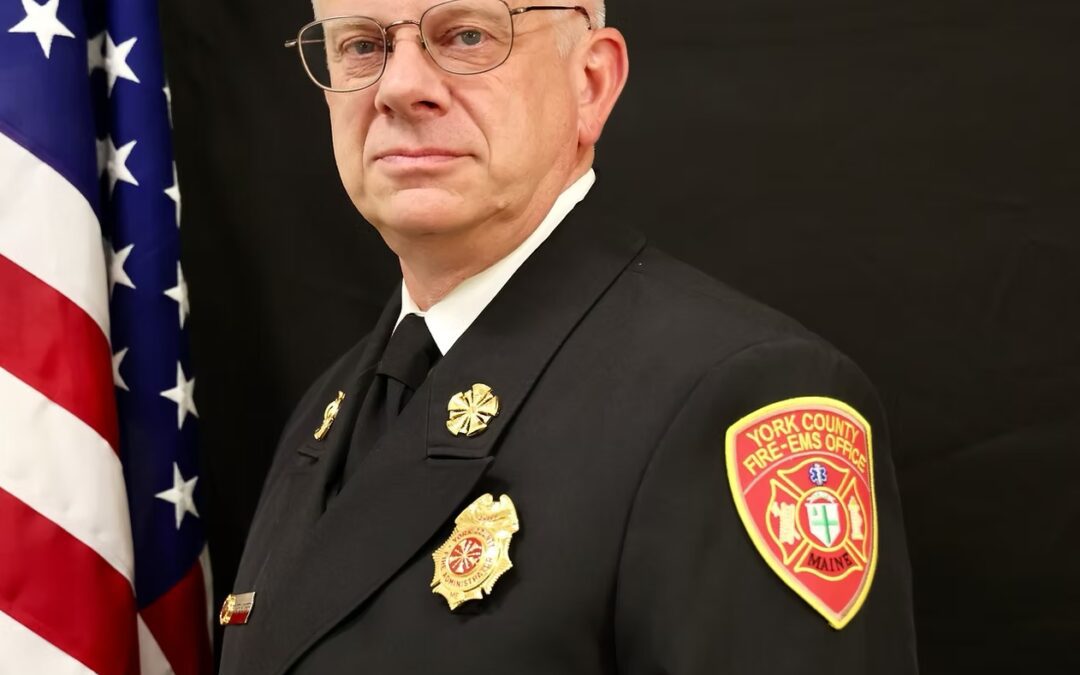
For decades, the idea of a dedicated training center for York County’s first responders was little more than a hope passed down from one generation to the next. Roger Hooper, now York County’s Chief Fire Administrator, remembers hearing the old-timers in Goodwin Mills talk about what was needed—a place where firefighters, EMS, dispatchers, and law enforcement officers could train together, side by side. 

When Hooper took on his role with the county in 2019, he became the only county-level fire administrator in Maine. From his first days on the job, he saw the need for a facility that could bring all branches of public safety together. “It’s been on the back burner for years,” he recalls. “But when I learned we’d have access to $20 million to build a training center, I knew it was time to make this vision a reality.”

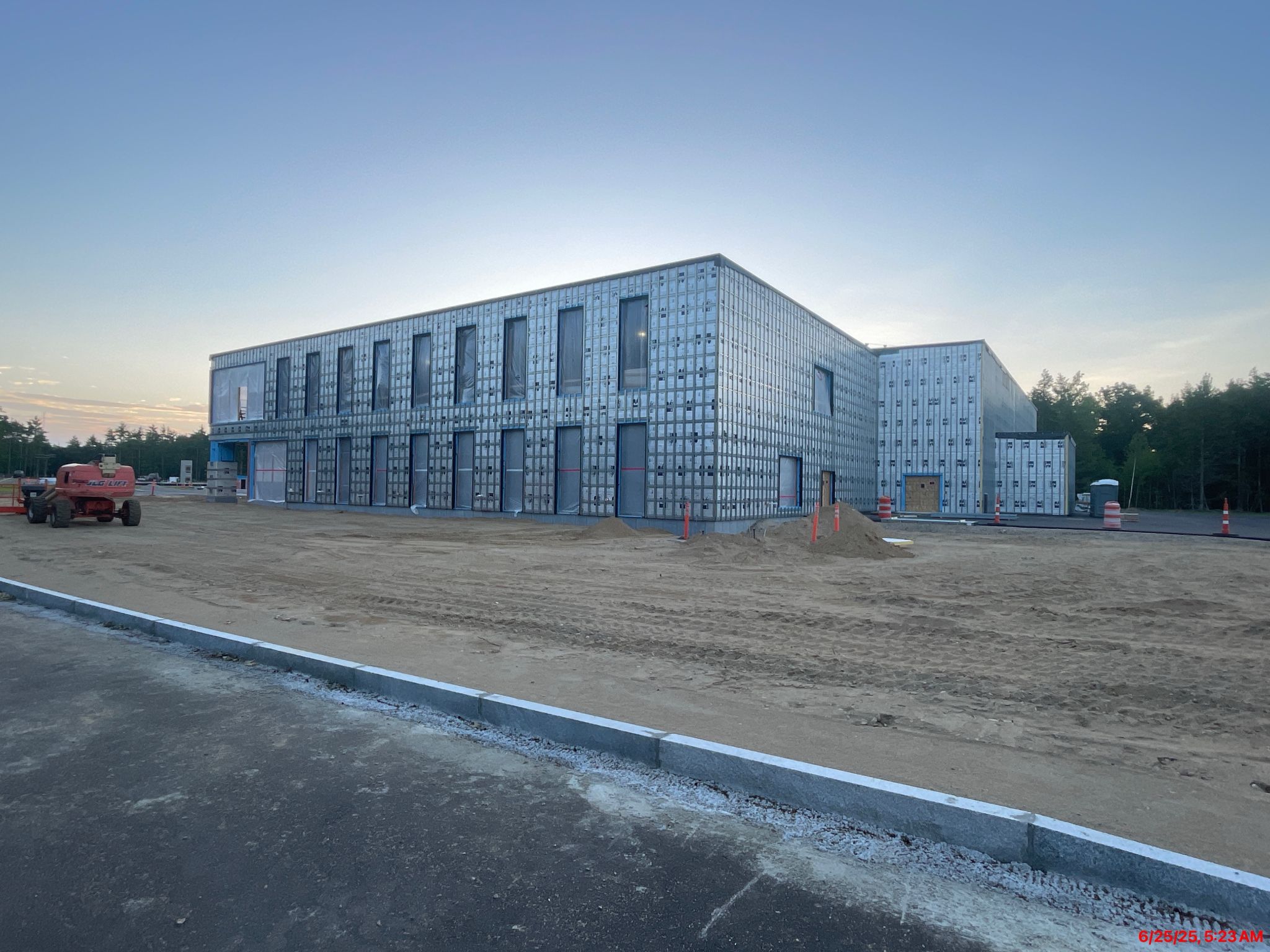
Exterior of First Responder Training Center

Hooper sketched out the initial design himself, envisioning a campus that would serve every aspect of emergency response. The concept quickly gained momentum. “All hazards—fire, EMS, dispatch, law enforcement—everyone jumped on the idea,” he says. County commissioners were convinced, and support from federal leaders soon followed. The timing was right: as the pandemic highlighted the urgent need for robust public safety infrastructure, funding became available, and York County seized the opportunity.

Construction is now underway, with the facility set to open its doors in January 2026. When complete, it will be one of the top five state-of-the-art training centers in New England—unmatched anywhere else in Maine. For the first time, departments that once trained in isolation will come together for higher-end, nationally recognized programs. “Right now, everything is separate,” Hooper explains. “This facility will offer a bigger bang—national programs, advanced simulations, and hands-on tactical training.”

The center’s impact will be felt far beyond the training grounds. York County’s first responders face daily challenges, from workforce shortages to the growing complexity of emergencies. Calls for service have skyrocketed, and the days of relying solely on volunteer firefighters are fading. “Most small towns are now putting on full-time staff,” Hooper notes. “We used to have 60 calls a year. Now, we have 60 calls a month.”

To address these challenges, the training center is partnering with the local community college to launch fire and EMT apprentice programs, tactical training, and even certificate and degree pathways for college credit. “If we provide quality training throughout their careers, the chance they will stay increases,” Hooper says. “This will improve the professionalism of first responders throughout the region.”

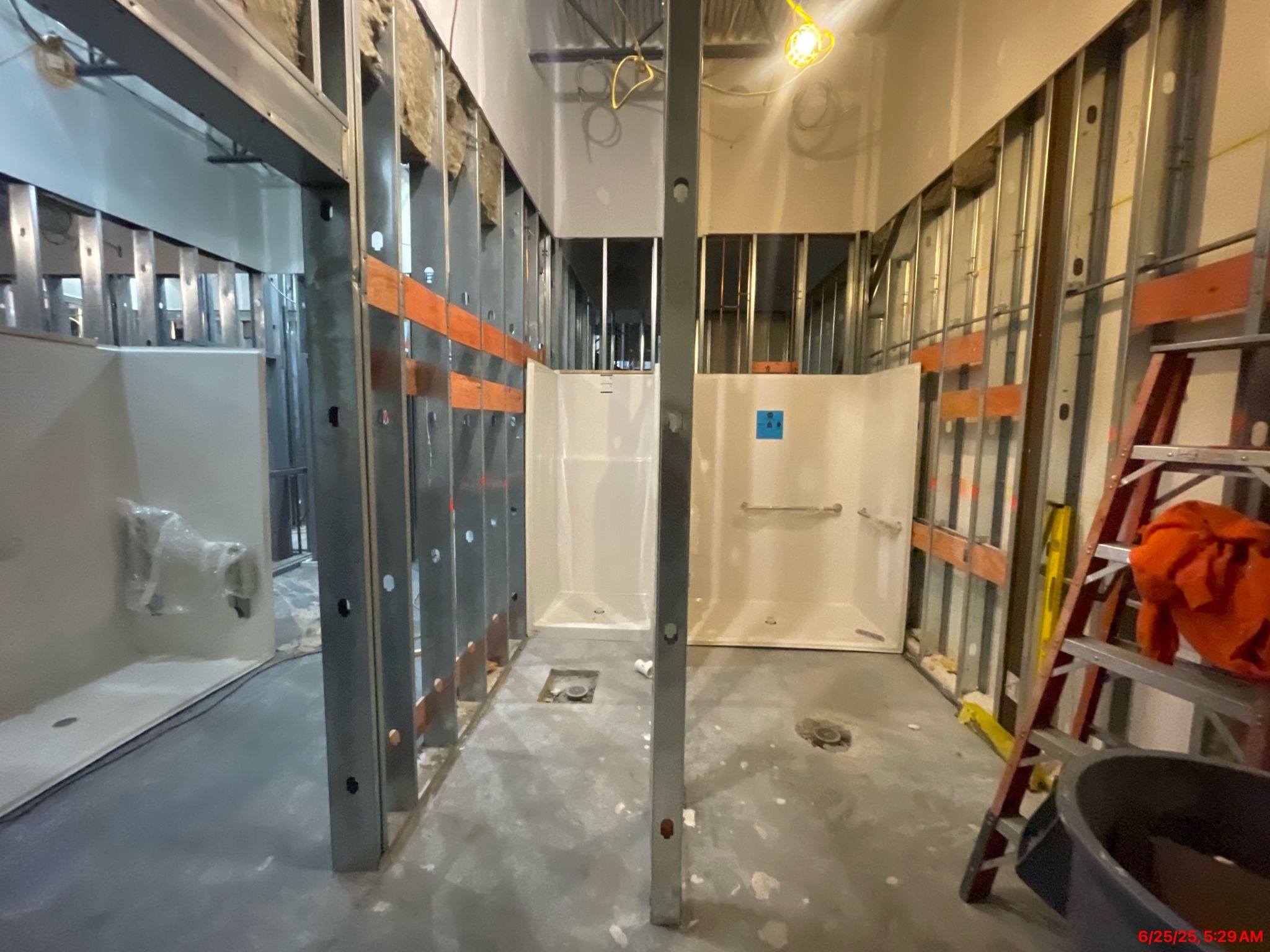
Interior of First Responder Training Center

Interior of First Responder Training Center

The facility will also house the York County Substance Use Treatment and Recovery Center, providing vital support for individuals who battle substance use disorder. “Having a treatment facility to partner with is huge,” Hooper emphasizes. “There will be programs and support for first responders as well.”

Inside, the center will feature cutting-edge technology: virtual reality equipment, simulation labs, a steel fire training tower, and even a pond for pump training. There will be spaces for hospital maternity scenarios—critical as more babies are delivered in ambulances due to rural hospital closures—and a jail cell for corrections training. Dispatchers, often overlooked, will finally have a place for scenario-based, integrated training alongside their field colleagues.

The excitement is palpable. “The general public has shown lots of interest,” Hooper says. “Everyone seems to see the need. When someone calls 911, they want someone competent to show up.”

For Hooper, the project is more than bricks and mortar. It’s the culmination of a vision shared by generations of York County’s first responders—a permanent investment in safety, readiness, and community. “This is something that will continue to benefit future generations,” he says. “It’s a testament to the county’s foresight and commitment to public safety.”

Something big is happening in York County. And it’s just the beginning.

About First County Foundation
Founded in 2023, FCF is charged with a mission “to support and strengthen safe and healthy communities by resourcing transformational solutions to the emergent needs of York County.”

Contact Us
If you have any questions about FCF, please get in touch with Rachel Stansfield at 207.459.7055 or restansfield@yorkcountymaine.gov.

Something Big is Happening

Something Big is Happening

For Billy Shore, Board Chair of First County Foundation (FCF), the future of York County First Responder Training Center and York County Substance Use Recovery Center is “very exciting.”

“Both centers have the potential to be models for the state, if not the region or nation,” he said. “I think they’ll be tremendous assets to the community.”

The Training Center is scheduled to open by the end of 2025 while the First Responder Training Center will open in spring 2026.

Founder Executive Chairman of Share Our Strength/No Kid Hungry, a national nonprofit in Washington D.C., Shore believes his experience running an organization that deals with childhood hunger translates well to FCF’s mission, especially with the recent acquisition of the First County Food Pantry.

“My focus is fundraising and revenue generation,” he said. “There hasn’t been a lot of asking going on yet, as the board is in its formative stage, but we are entering the asking stage.”

For now, however, Shore is focused on connecting with the community to build a robust constituency. “Certainly, in terms of substance use, almost everybody has been touched in some way,” he added. “Not everyone knows the facilities are under construction, but people are starting to catch on that something big is happening in their community.”

About First County Foundation
Founded in 2023, FCF is charged with a mission “to support and strengthen safe and healthy communities by resourcing transformational solutions to the emergent needs of York County.”

Contact Us
If you have any questions about FCF, please get in touch with Rachel Stansfield at 207.459.7055 or restansfield@yorkcountymaine.gov.